

News
News Published: 23 January 2026
Afghanistan: Taliban consolidate theocratic State while the humanitarian crisis deepens, EUAA report finds
The EUAA has just published its latest Country of Origin Information (COI) report on Afghanistan. It provides updated information on the political context and human rights situation in the country, the general security situation as well as the treatment of selected profiles. It comes as Afghans were the top citizenship seeking international protection in the EU+, between January 2024 and November 2025.
The European Union Agency for Asylum (EUAA) has just published its latest Country of Origin Information report, “Afghanistan: Country Focus”, which provides an overview of the situation in the country under the rule of the Taliban de facto government. Since their take-over of the country in 2021, the authorities have progressively moved towards a theocratic police state, enforcing a strict interpretation of Islamic law (Sharia) that heavily restricts personal rights and freedoms.
The Afghan population is subject to numerous obligations, including adhering to strict dress codes, attending congregational prayer, and abstaining from music. Women and girls continue to be particularly affected, facing restrictions on their access to education, employment, health and justice, as well as in freedom of movement and freedom of expression. In addition, the de facto authorities have heavily restricted civic space and become increasingly intolerant of criticism. Indeed, the situation is such that even individuals considered loyalists generally refrain from publicly commenting on governance issues. The EUAA report provides detailed information on how these restrictions are now being enforced; despite some remaining regional differences, they are increasingly uniform across the country.
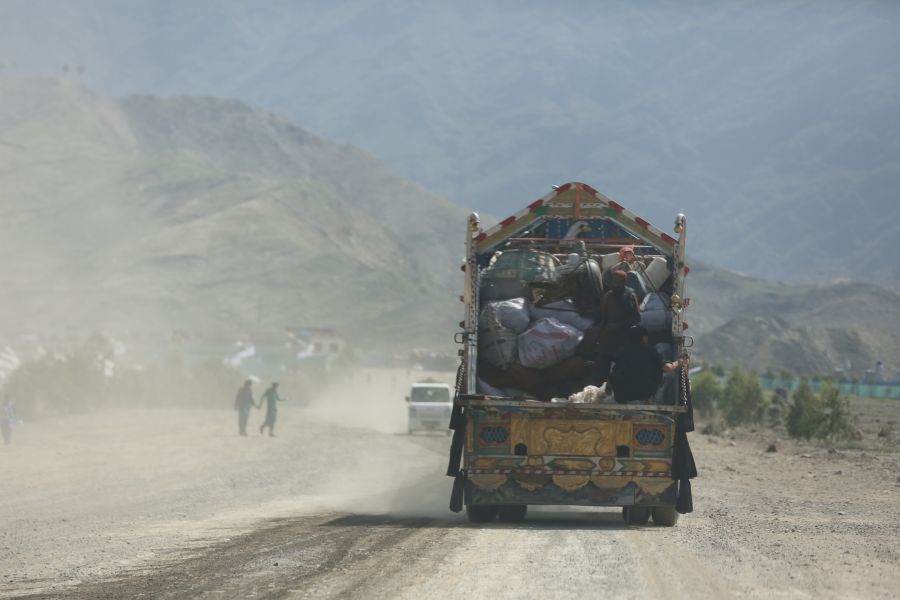
At the same time since the Taliban takeover millions of Afghans have, for the most part, been returned from Iran and Pakistan. In fact, around 2.7 million people were reportedly returned in 2025 alone, mainly driven by the intensified repatriation efforts of these neighbouring countries’ governments, including through large numbers of coerced and forced returns.
This significant influx has put an additional strain on an already precarious humanitarian situation in Afghanistan, with limited resources available to address poverty, food insecurity, and provide essential healthcare and basic services; and to deal with the impact of recurring climate-related shocks. These difficulties have been further compounded by a series of global aid cuts by various governments and multilateral organisations.
EU Asylum situation for Afghan nationals
Afghans were the top nationality applying for international protection in the EU+ between January 2024 and November 2025, with a total of 196 000 asylum applications lodged. This high volume of applications, particularly in 2025, was mostly due to a surge in repeated Afghan applications in Germany (35 000, since June 2025) and, to a far lesser extent, Austria (2 900, since October 2024). Germany remained the main destination country, with close to half of all Afghan applications being lodged there. It was followed by Greece, France and Switzerland, that together accounted for over a third of the total.
Between January 2024 and November 2025, Afghan asylum applicants were issued close to 217 000 first instance decisions in EU+ countries, with more than half of them in Germany. The first instance recognition rate stood at 65 %. By the end of November 2025, around 47 000 Afghan cases were pending at first instance in the EU+.
Background
The EUAA regularly updates its Country of Origin Information reports, which aim to provide accurate and reliable up-to-date information on third countries to support EU+ national asylum and migration authorities involved in migration and international protection procedures.