

News
Press Release Published: 3 December 2025
Syria: Updated EUAA Country Guidance outlines changing international protection needs
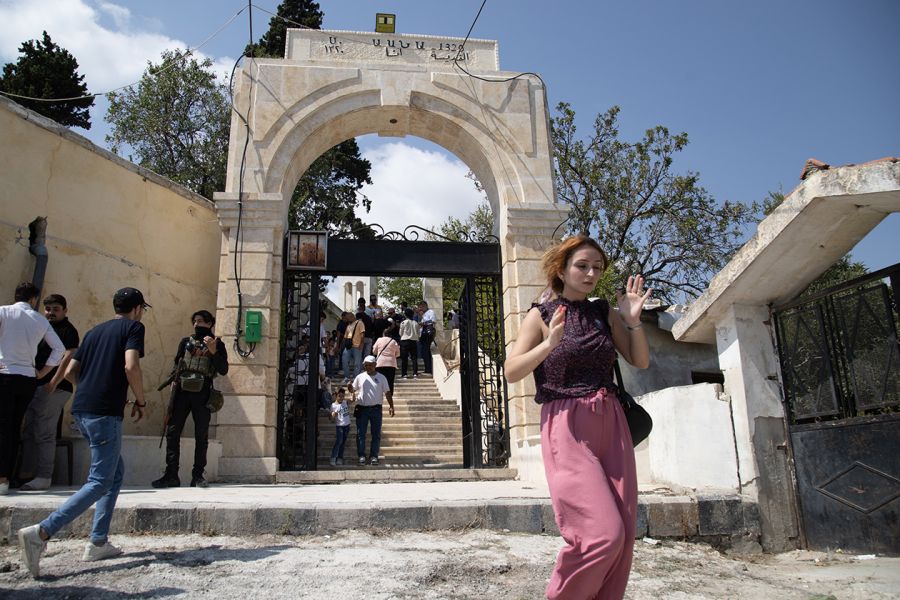
The EUAA has published a comprehensive update to its Country Guidance on Syria. Endorsed by EUAA Management Board, it represents an assessment of international protection needs arising from the changed situation in Syria. With most EU+ countries having resumed the examination of applications by Syrian nationals, the guidance will assist their national authorities in assessing these applications, fostering convergence in asylum decisions at the EU level.
The European Union Agency for Asylum (EUAA) has just published a comprehensive update to its Country Guidance on Syria. It builds on the Agency’s interim guidance issued in June 2025, and recent Country of Origin Information reports. This comprehensive update takes stock of changing international protection needs, resulting from the fall of the Assad regime. It aims to support national authorities in examining fairly and consistently the thousands of pending applications lodged by Syrian nationals, both prior the fall of the Assad regime, as well as newly submitted claims.
A key conclusion in the EUAA Country Guidance on Syria, is that risk profiles associated with military service such as draft evaders and military deserters as well as other opponents of the former Assad regime are no longer at risk of persecution.
However, conversely, the Guidance sheds light on categories of applicants who remain, in general, eligible for refugee status, such as persons with diverse sexual orientation, gender identity, gender expression and sex characteristics (SOGIESC), and on new profiles potentially requiring international protection in the post-Assad Syria. Those include, subject to individual circumstances, persons associated with the former Government of Syria and members of ethno-religious groups such as the Alawites, Christians, and Druze. Additionally, Palestinians who no longer benefit from the protection or assistance of UNWRA1 in Syria should continue to be granted ipso facto refugee status.
The newly issued Country Guidance document also provides an updated assessment of the security situation in Syria, which is considered improved but volatile, for determining possible subsidiary protection needs. While indiscriminate violence continues to take place, it does so ‘not at a high level’ in most of Syria’s governorates; furthermore, there is no real risk of serious harm in the Damascus governorate. In fact, the guidance notes that Damascus city may provide some Syrian applicants with an Internal Protection Alternative.
Asylum applications by Syrian nationals
Monthly Syrian asylum applications have dropped significantly since the fall of the Assad regime in December 2024; falling from over 16 000 in October 2024, to just 3 500 in September 2025. However, Syrians still had the largest volume of first instance pending cases with 110 000 cases awaiting decisions in the EU+ at the end of September 2025.
Background
The country guidance documents provide country-specific, common analysis and guidance in relation to the assessment criteria of international protection needs established in the EU asylum acquis. They are developed together with senior policy officials from EU+ countries and endorsed by the EUAA Management Board. In accordance with Article 11 of the EUAA Regulation, Member States have the obligation to take into account the guidance notes and common analysis when examining applications for international protection, without prejudice to their competence for deciding on individual applications.
- 1
The United Nations Relief and Works Agency (UNRWA).